



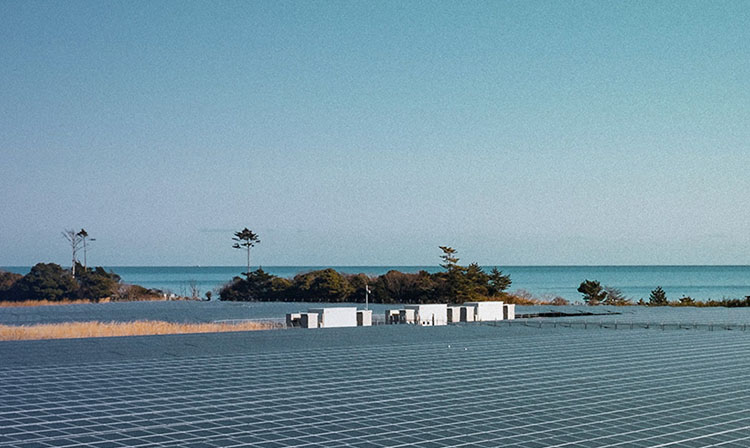
Cases
Not only used on photovoltaic panels

-

 System
Photovoltaic Nano Self-Cleaning Coating
-
 Place
PlaceChongqing, China
-
 Date
DateJune 2025
-
 Application
Industrial Rooftop Photovoltaic Power Station
Project background
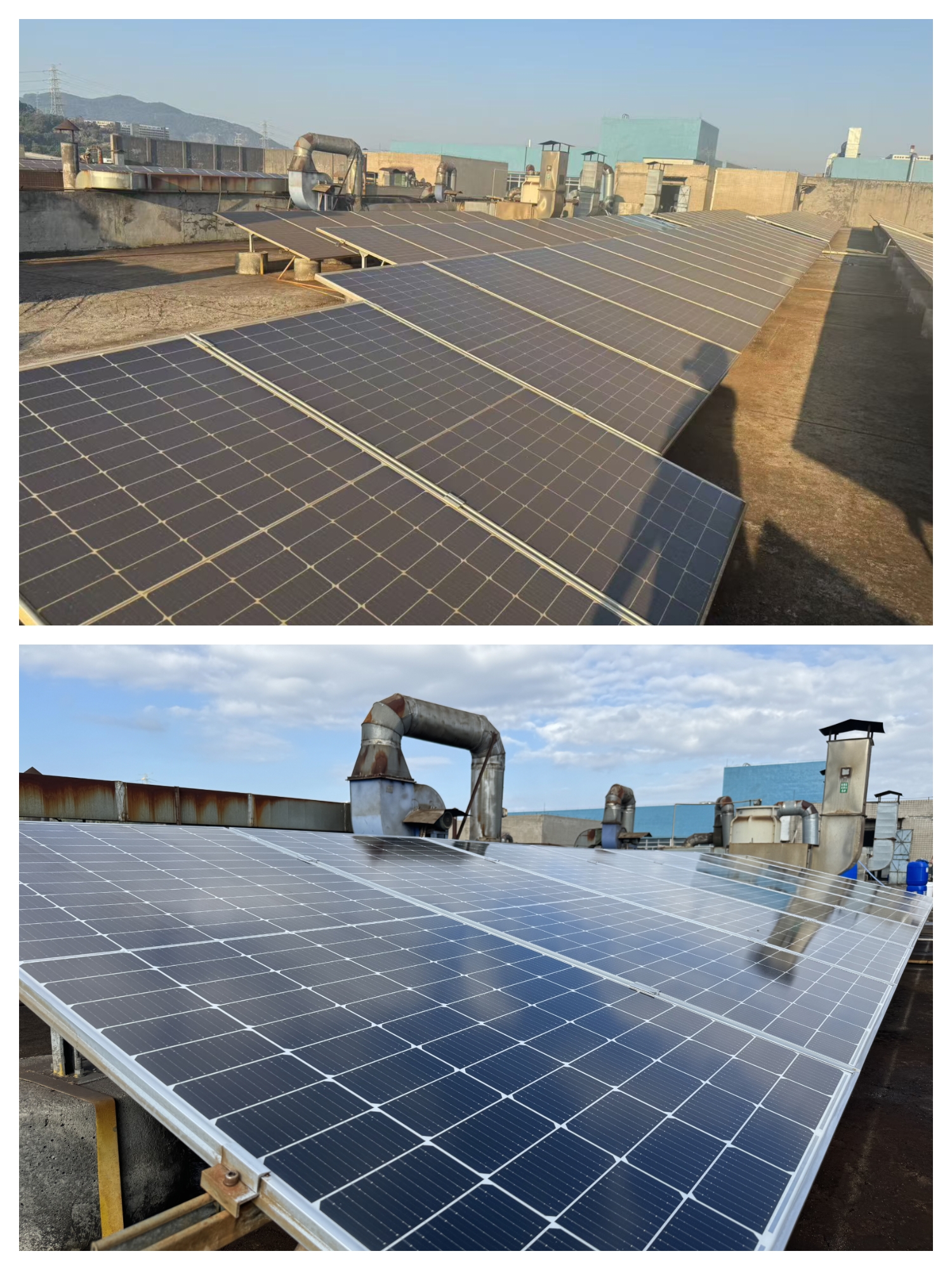
Chongqing is an important industrial base in China, with a large number of machinery manufacturing, automotive parts, and equipment manufacturing enterprises. Rooftop photovoltaic systems installed on industrial buildings in this region are commonly exposed to both industrial oil mist pollution and high-humidity environmental conditions.
This 2.5MW photovoltaic power station was built on the rooftop of a precision machinery manufacturing factory in 2019, covering approximately 20,000 square meters of industrial rooftop area. Due to Chongqing’s special industrial and climatic environment, the station faced several serious operation and maintenance challenges.
Oil mist contamination was severe. Cutting fluids and lubricating oils used during mechanical processing formed microscopic oil mist during high-speed operation. These oil mist particles combined with PM2.5 particles in the air and created sticky contamination layers on the solar panel surface. This type of oil-dust mixture had strong adhesion and was difficult to remove with ordinary rainwater.
High humidity further aggravated contamination. Chongqing has an average annual humidity of around 80% and more than 100 foggy days each year. The humid environment made oil stains more likely to attach to the panel surface and remain sticky. It also promoted microbial growth, forming biofilm on the solar glass surface and further reducing light transmittance.
Traditional cleaning methods were difficult and risky. Chemical degreasing agents were often required, but rooftop cleaning on industrial buildings located on slopes involved high safety risks and high labor costs. Oil-contaminated surfaces were slippery, increasing operational risks during manual cleaning.
As a result, the actual power generation efficiency of the station dropped to only about 82% of the designed value, with an annual power generation loss of approximately 280,000 kWh. More importantly, oil contamination accelerated module aging, and some areas showed potential-induced degradation risks, threatening the long-term reliability of the power station.
Project introduction
To address the special challenges of Chongqing’s industrial environment, Yingcai New Materials developed a triple-function composite nano coating system specifically designed for oil mist, dust contamination, and high-humidity conditions.
The core innovation of the coating system lies in its intelligent surface-switching capability. Under dry conditions, the coating surface shows strong oleophobic properties, with an oil contact angle greater than 150°, helping prevent oil mist adhesion. When exposed to water or rain, the surface rapidly switches to a super-hydrophilic state, with a water contact angle below 10°, allowing a continuous water film to carry away contaminants.
This intelligent response is particularly suitable for Chongqing’s humid and foggy climate, where frequent moisture and rainfall can help activate the self-cleaning function.
The coating also contains nano titanium dioxide photocatalytic components. Under weak light conditions, the photocatalytic layer can be activated to decompose organic compounds in oil stains into carbon dioxide and water, reducing pollutant adhesion at the source.
In addition, the coating includes safe anti-mildew and antibacterial additives designed for high-humidity environments. These components help inhibit algae and fungal growth on the solar panel surface, preventing biofilm formation and maintaining higher light transmittance.
Yingcai’s team also optimized the coating for low-light adaptability. Since Chongqing is known for its frequent foggy weather and relatively limited annual sunshine hours, the coating enhances diffuse light utilization and reduces surface reflection, helping PV modules maintain better power generation efficiency even under cloudy and rainy conditions.
Application Process
Yingcai provided a customized nano coating application solution for this 2.5MW industrial rooftop photovoltaic power station.
Before coating application, the team carried out a detailed assessment of the rooftop environment, contamination level, panel surface condition, and safety risks. The solar panels were cleaned to remove existing oil mist, dust, and stubborn surface deposits, ensuring that the coating could bond effectively with the solar glass surface.
After surface preparation, Yingcai applied the multifunctional nano coating to the photovoltaic modules. The coating formed a transparent protective layer on the glass surface, delivering oil-repellent, hydrophilic self-cleaning, anti-dust, anti-mildew, anti-static, and transmittance-enhancing functions.
The application process was completed according to standardized technical procedures to ensure coating uniformity, optical performance, and long-term durability. After application, the power station entered a monitoring period to evaluate changes in cleaning frequency, surface contamination, and power generation efficiency.
Project Results
The application of Yingcai nano coating brought multi-dimensional value improvement to the Chongqing machinery manufacturing enterprise and effectively solved the long-standing operation and maintenance pain points of its industrial rooftop photovoltaic system.
Power generation performance improved significantly. After coating application, the average power generation efficiency of the station increased by 11.3%. In workshop areas with heavier oil mist pollution, the power generation improvement reached up to 18%.
For this 2.5MW photovoltaic system, this means an annual power generation increase of approximately 310,000 kWh. Based on the local industrial electricity price of RMB 0.75 per kWh, the additional annual revenue is estimated at approximately RMB 230,000.
The operation and maintenance model was also fundamentally improved. Before application, the station required cleaning once per month. After coating application, the cleaning frequency was reduced to twice per year. The cleaning method changed from chemical degreasing and high-pressure washing to ordinary low-pressure water rinsing.
The time required for each cleaning operation was reduced from about five days to approximately one and a half days. Professional high-risk cleaning teams were no longer required, and ordinary factory maintenance personnel could complete routine cleaning work.
Customer value
The coating application created clear economic, operational, safety, and asset protection value for the customer.
Annual cleaning frequency was reduced from 12 times to 2 times, representing an 83% reduction. The cost of each cleaning operation decreased from approximately RMB 12,000 to RMB 3,000, reducing single cleaning costs by about 75%.
Power generation efficiency improved from about 82% of the designed value to approximately 93.3% of the designed value, representing an 11.3% improvement. The annual power generation gain reached approximately 310,000 kWh, equivalent to a 13.6% increase compared with the previous baseline.
The project also greatly reduced safety risks. By eliminating frequent high-altitude chemical cleaning operations and reducing the need for chemical storage and handling in the factory area, the overall safety cost was reduced by approximately 70%.
The investment payback period was estimated at around 10 months, demonstrating strong economic feasibility for industrial rooftop photovoltaic projects facing oil mist and dust contamination challenges.
Long-Term Protection Value
The nano coating helps prevent oil mist from penetrating module edges and junction boxes, reducing leakage risks and potential-induced degradation problems. It also slows down module aging caused by oil contamination, humidity, and environmental erosion.
The coating is expected to extend module service life by approximately three to five years and delay the rate of power degradation. This provides long-term asset protection for industrial rooftop photovoltaic power stations and helps ensure stable operation over the full lifecycle of the system.
By changing the maintenance mode from frequent chemical cleaning to low-pressure rinsing, the solution also reduces damage risks to the solar glass, aluminum frames, sealants, and electrical components.
Product Inquiry
-
Purchase products
-
Become a partner
-
After-sales service

-
1.Project background
-
2.Project introduction
-
3.Customer value
-
4. Product Inquiry


