












Pusheng Ye Attends the 24th Lancang-Mekong Regional Power Cooperation Meeting to Discuss PV O&M Efficiency and Green Energy Development
-
Company News
-
 2026-06-15
 -
 Yingcai New Material

Mr. Pusheng Ye, Chairman of YINGCAI New Materials, attended the 24th Lancang-Mekong Regional Power Cooperation Meeting in Kunming, sharing insights on photovoltaic nano self-cleaning coatings, PV O&M efficiency improvement, and clean energy cooperation.
On June 13, 2026, the 24th Lancang-Mekong Regional Power Cooperation Meeting was held in Kunming, Yunnan. Experts, scholars, energy enterprises, engineering companies, investment institutions, and green technology representatives gathered to discuss regional power cooperation, clean energy transition, power interconnection, green development, and overseas energy cooperation opportunities.
Mr. Pusheng Ye, Chairman of YINGCAI New Materials, was invited to attend the meeting as a representative from the field of nano functional materials and photovoltaic operation and maintenance materials. During the exchange session, he shared YINGCAI’s practical experience in photovoltaic nano self-cleaning coatings, PV module anti-dust protection, solar panel cleaning, and power station efficiency improvement.
Regional Energy Cooperation and Clean Energy Transition
The Lancang-Mekong region has broad development potential in hydropower, solar power, wind power, multi-energy integration, and cross-border power cooperation. As clean energy projects continue to expand in Southeast Asia and surrounding regions, long-term operation and maintenance capability is becoming increasingly important for renewable energy assets.
The meeting covered key topics including regional energy policies, clean energy transformation, Vietnam’s economic development, China-Vietnam trade trends, Lancang-Mekong energy cooperation, overseas energy investment, and green industrial collaboration. It provided valuable insights for enterprises seeking to participate in regional clean energy development and international project cooperation.
For YINGCAI New Materials, the meeting offered an important opportunity to better understand energy cooperation trends, overseas photovoltaic project needs, and the growing demand for advanced material solutions in clean energy applications.
PV O&M Challenges in Long-Term Operation
During the exchange, Mr. Pusheng Ye emphasized that as photovoltaic power stations continue to expand, the industry is gradually shifting its focus from installed capacity growth to long-term operational efficiency.
For industrial rooftop PV systems, distributed solar power stations, utility-scale ground-mounted solar projects, and overseas renewable energy projects, surface contamination on PV modules has become one of the key factors affecting power generation revenue.
Dust, sand, rust, scale, bird droppings, industrial particles, chemical pollutants, and mineral deposits can reduce the light transmission of PV glass, weaken power generation efficiency, and increase cleaning and maintenance costs.
These problems are especially common in industrial parks, manufacturing factory rooftops, chemical industry zones, dusty regions, desert areas, and projects with difficult cleaning conditions. Traditional manual cleaning and high-pressure water washing can solve short-term surface contamination, but they often face pressure in water consumption, labor cost, cleaning frequency, safety management, and long-term maintenance efficiency.
YINGCAI Photovoltaic Nano Self-Cleaning Coating Solution
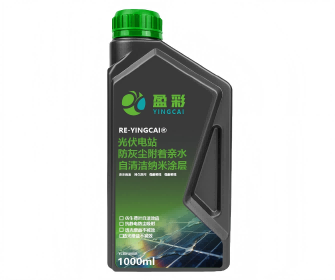
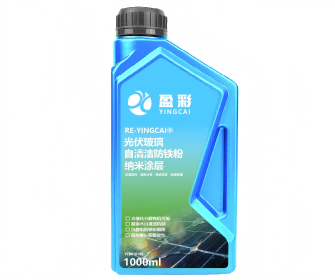
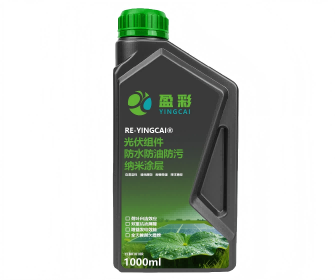
To address these practical challenges, YINGCAI New Materials focuses on photovoltaic nano self-cleaning coating solutions.
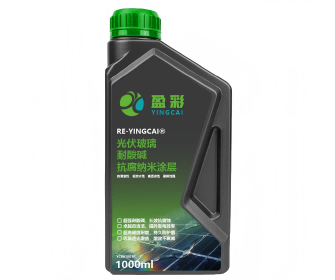
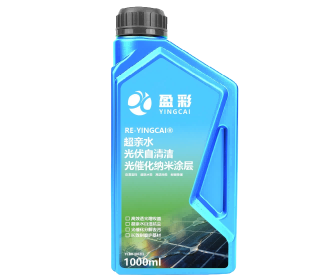
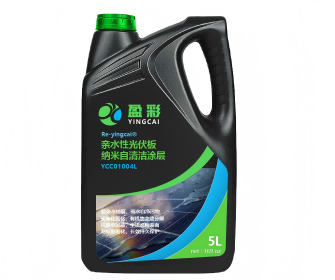
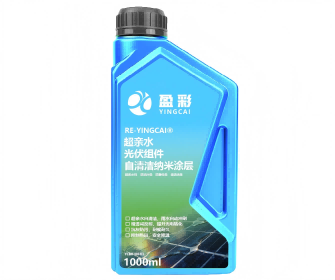
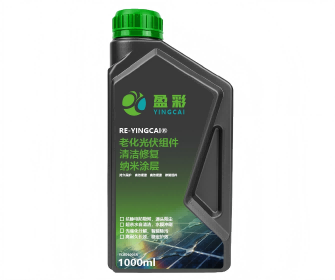
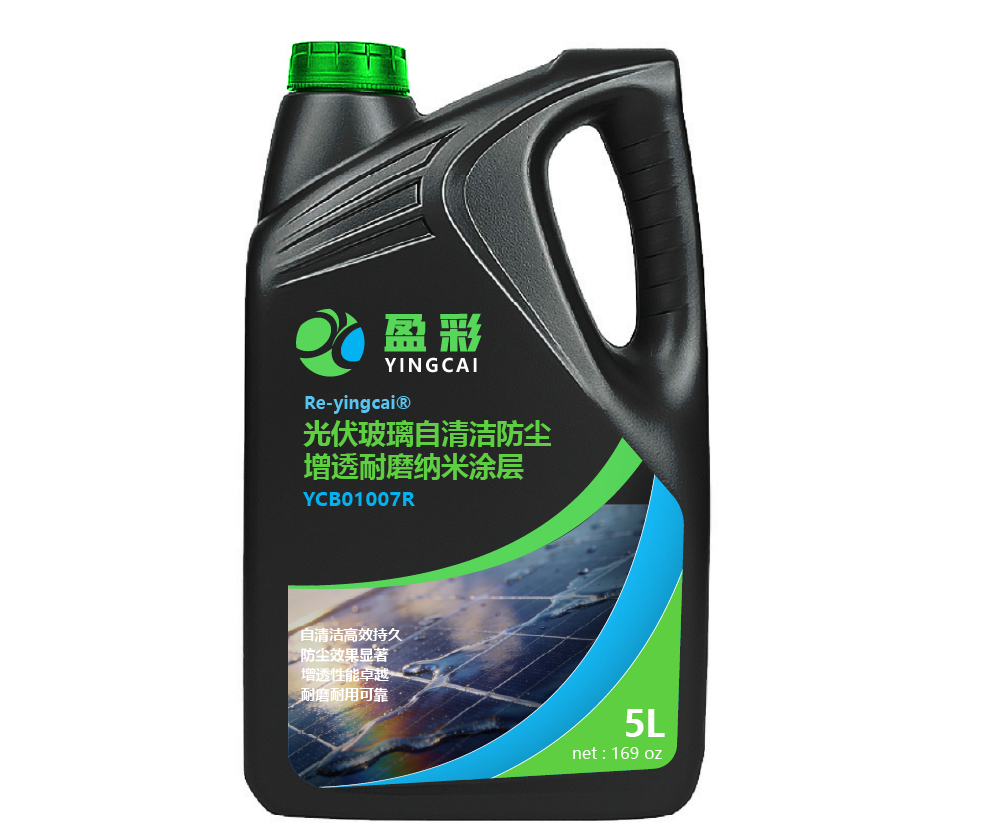
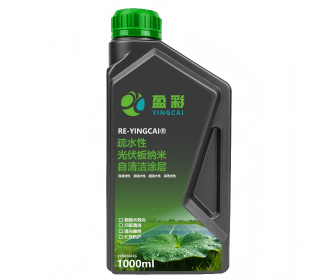
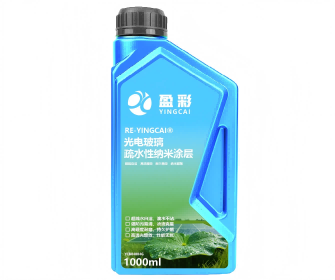
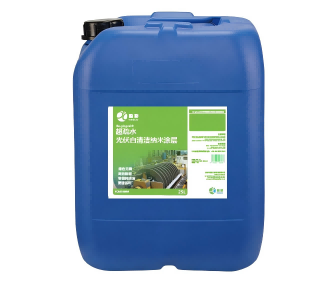
The coating forms a transparent, stable, and weather-resistant nano functional layer on the surface of PV module glass. By improving the hydrophilic or hydrophobic surface characteristics of the module, the coating helps reduce the adhesion of dust, scale, rust, chemical pollutants, and other contaminants.
With natural rainwater flushing, the coated surface can achieve better self-cleaning performance, helping modules stay cleaner for a longer period. Compared with relying only on manual cleaning, photovoltaic nano coating provides a preventive surface protection solution that reduces the probability of pollutant attachment from the material surface itself.
In practical applications, YINGCAI photovoltaic nano self-cleaning coating has been used in multiple rooftop PV projects, including industrial park rooftops, environmental protection industrial zones, factory rooftop PV systems, and manufacturing enterprise solar projects. These projects involve different pollution types such as rust, dust, scale, chemical pollutants, and mineral particles, providing useful experience for broader PV O&M scenarios.
Integrated Cleaning and Protection Value
Mr. Pusheng Ye noted that the value of photovoltaic nano self-cleaning coating is not limited to keeping PV module surfaces clean. More importantly, it helps power stations build a more stable and long-term operation and maintenance system.
By combining photovoltaic nano coatings, PV anti-dust and anti-fouling coatings, solar panel cleaning agents, and supporting O&M solutions, solar power stations can reduce pollutant adhesion, lower cleaning frequency, save cleaning water, reduce manual maintenance pressure, and improve long-term power generation performance.
This material-based solution is highly relevant to the clean energy development needs of the Lancang-Mekong region. As more renewable energy projects are developed in Southeast Asia and surrounding markets, demand for PV module protection, dust control, water-saving cleaning, and long-term performance improvement will continue to grow.
Cooperation Opportunities in Clean Energy Projects
This meeting also created new communication opportunities for YINGCAI New Materials with energy enterprises, engineering companies, EPC contractors, international energy investors, and overseas renewable energy project developers.
YINGCAI will continue to focus on photovoltaic nano self-cleaning coatings, PV module anti-dust protection, solar panel cleaning solutions, PV O&M efficiency improvement, wind turbine anti-icing nano coatings, industrial anti-corrosion and wear-resistant coatings, and green nano functional materials.
By strengthening cooperation with power companies, engineering organizations, EPC contractors, and overseas project owners, YINGCAI aims to promote the application of nano functional materials in more clean energy scenarios.
Looking Ahead
From regional energy cooperation to photovoltaic operation and maintenance, and from policy exchange to material technology application, YINGCAI New Materials will continue to serve the clean energy industry with green chemistry and advanced material technologies.
In the future, the company will further promote the integration of photovoltaic nano coating technology with renewable energy projects, helping power stations improve efficiency, reduce O&M costs, save water resources, and achieve more sustainable operation.
YINGCAI New Materials will continue to contribute practical material solutions to high-quality renewable energy development and regional green, low-carbon cooperation.


